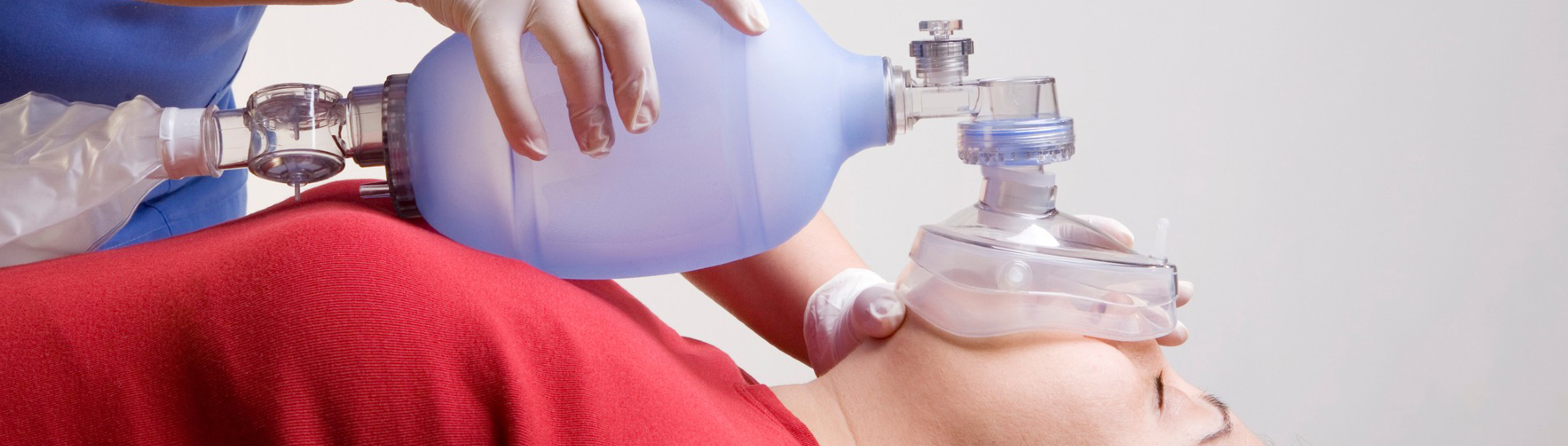

This comparison examines both materials across performance, application fit, regulatory compliance, and cost. A reusable silicone bag valve-mask resuscitator (BVMR) and disposable SEBS manual resuscitators each serve distinct settings. Tianzuo Medical works with both materials and helps you match the right one to your clinical environment, reprocessing model, and budget.
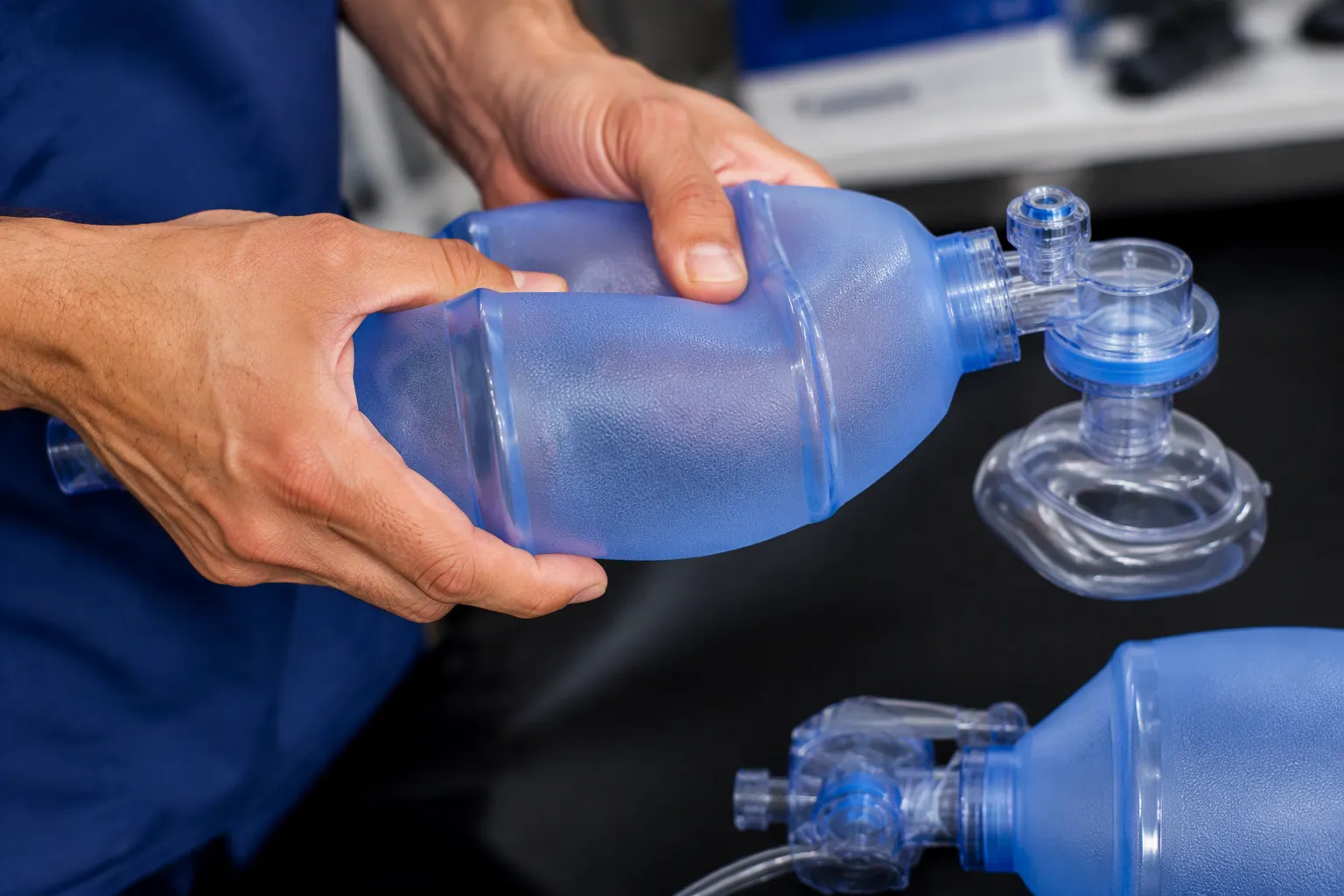
Both materials deliver the spring-back recoil that makes a self-inflating bag work. You squeeze the bag, release it, and the material pulls air back in for the next breath. Silicone and SEBS both handle this job well. The valve assembly is a different story. Polycarbonate and polysulfone keep the valve strong and clear, so the housing holds its shape and you can see through it during use. Bag material and valve material therefore follow separate logic.
Reusable silicone BVMs allow for better bag re-expansion over a long service life. Solid silicone and liquid silicone rubber (LSR) both go into reusable resuscitation balloons, and LSR gives you a soft, highly transparent result. A silicone bag valve-mask resuscitator (BVMR) therefore keeps its recoil through repeated cycles, which matters when the same unit returns to service again and again. Wall thickness and elastic recovery drive that performance. A thicker wall resists collapse, and good recovery brings the bag back to full volume fast. Silicone also resists compression set well, so the bag keeps its shape after long storage between uses.
SEBS holds its own in recoil performance. An SEBS bag is softer than a PVC bag, and the Ambu SPUR II resuscitator shows what a thin SEBS self-inflating bag can do. That unit pairs excellent recoil with a SafeGrip surface, and the grip improves handling when your hands are busy or wet. Thin walls and good elastic recovery let the bag refill quickly between compressions. Check recoil after every cleaning cycle on a reusable unit, and confirm the bag returns to shape without creasing or sticking.
Feel separates the two materials in daily use. First Care Solutions describes silicone as soft and lightweight to grasp without causing fatigue to rescuers during extended ventilation. The same source credits silicone with exceptional tactile and visual feedback during resuscitation, minimum mechanical resistance, a comfortable handle feeling, and optimum stroke volumes that could help prevent muscle cramps and shoulder pain.
SEBS manual resuscitators share part of that profile. First Care Solutions notes that SEBS is highly responsive and lightweight, minimizes mechanical resistance, and gives users exceptional tactile and great visual feedback during ventilation. The table below sets the two side by side.
|
Material |
Flexibility and feel characteristics |
|---|---|
|
Silicone |
Soft and lightweight to grasp without causing fatigue to rescuers during extended ventilation; exceptional tactile and visual feedback during resuscitation with minimum mechanical resistance; comfortable handle feeling and optimum stroke volumes which could help prevent muscle cramps and shoulder pain. |
|
SEBS |
Highly responsive and light weight features minimize mechanical resistance; provides users with exceptional tactile and great visual feedback during ventilation. |
The practical reading is simple. Silicone fits long procedures and repeated reuse, where hand comfort and consistent stroke volume matter most. SEBS fits single-use SEBS manual resuscitators, where light weight and responsiveness carry the day at a lower unit cost. A textured grip surface helps either material in gloved hands. Neither material leaves you short on feedback at the bag.
Reusable units face a long life of wipe-downs and immersion baths. Silicone handles that routine well. The material resists repeated cleaning and disinfection cycles without losing its softness or its recoil. You can wipe a silicone bag valve-mask resuscitator (BVMR) between patients, follow the maker's disinfectant instructions, and return the unit to service with confidence. Check the bag surface after each cycle. Look for tackiness, clouding, or small cracks, because those signs tell you the material is aging.
SEBS manual resuscitators follow a different path. You use one once and discard it, so it never endures a reprocessing cycle. That single-use design removes the chemical wear that repeated disinfection causes. Each material therefore meets the cleaning demand its setting creates. A busy ward that reprocesses equipment daily leans on silicone. A field kit or an isolation room leans on SEBS and skips reprocessing altogether.
Heat tolerance separates the two materials most clearly. According to the Ambu bag FAQ published by AED Superstore, some Ambu bags tolerate autoclave sterilization at 134° C or 272° F. The same source notes that other bags need the recommended disinfectant solution instead. Glutaraldehyde 2% works as an appropriately high-level disinfectant, and the bag must stay immersed for at least 20 minutes. RLV adds that a reusable silicone ambu bag cleans easily and autoclaves at 134° Celsius.
Storage favors silicone for the long haul. A reusable silicone BVM set returns to its case and waits for the next shift. Silicone resists compression set, so the bag keeps its shape between uses. SEBS units ship sterile and stay sealed until the moment of use. Store them dry, keep the packaging intact, and check the expiry date before you open a unit. Heat and sunlight degrade the seal, so pick a cool, dry shelf.
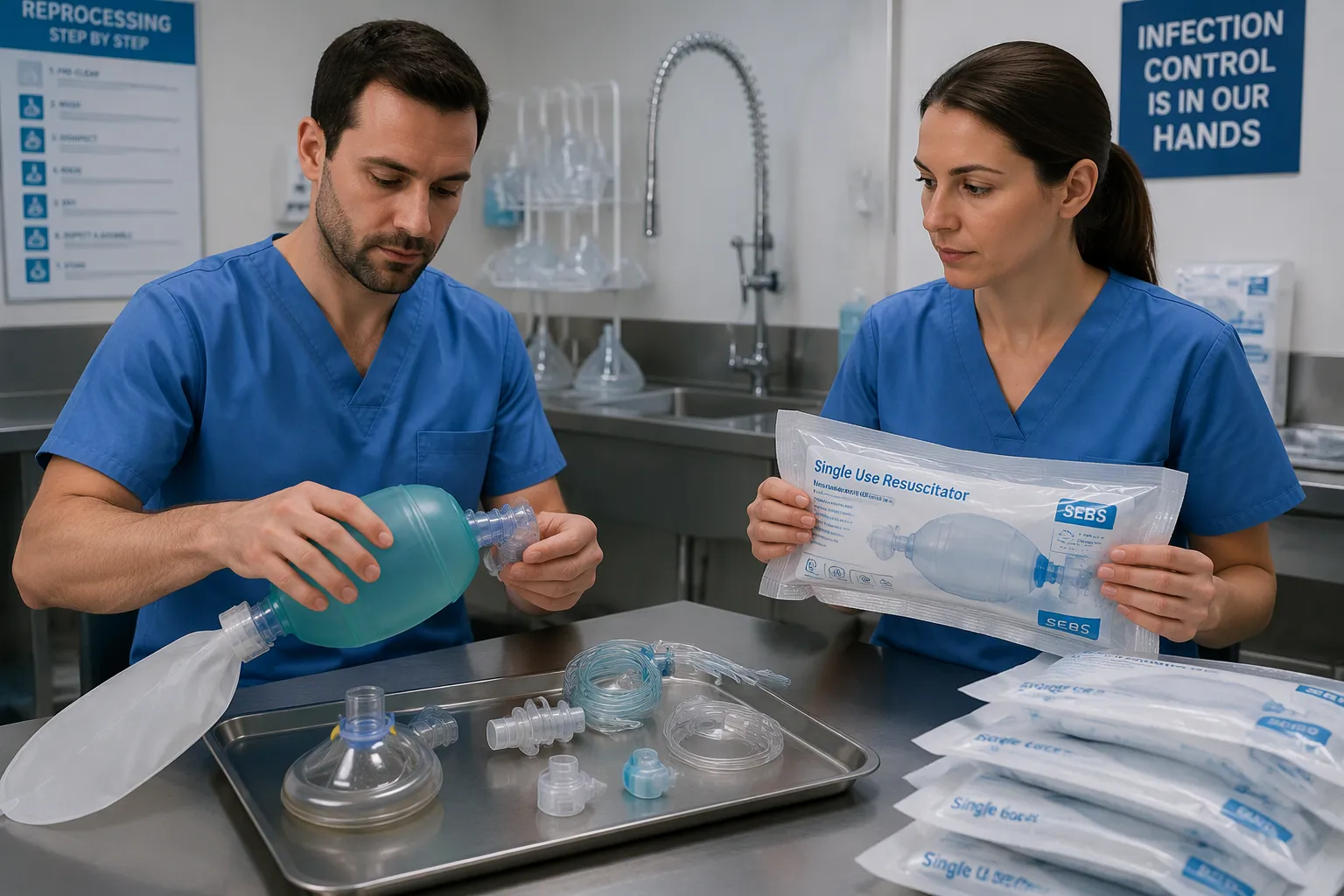
The reprocessing model you choose shapes the material decision more than any other factor. PVC and SEBS manual resuscitation bags are typically disposable. You use one for a single patient encounter and then discard it. Reusable masks take a different route. Manufacturers make them from liquid silicone rubber, a material that is soft and highly transparent. That combination lets you inspect the mask for soil or damage before each use and clean it for the next patient.
A silicone bag valve-mask resuscitator (BVMR) earns its place in any setting that reprocesses equipment. Silicongasket.com reports that a reusable manual resuscitator can be cleaned or sterilized and used repeatedly up to 20 times. That service life spreads the purchase price across many patients. The same source notes that some Ambu bags tolerate autoclave sterilization at 134° C, which fits a central sterile department workflow. Silicone also brings practical advantages to the bedside. It is environmentally friendly and 100% latex free, so you avoid natural rubber latex exposure for staff and patients. It is odorless, while a PVC balloon carries a slight smell. Silicone feels softer and offers a better handfeel during ventilation.
A reusable silicone BVM set arrives as a complete kit. The set includes:
A face mask
Oxygen tubing
A PEEP valve
An inlet valve
A reservoir bag
The set contains no natural rubber latex, so you can stock one SKU for latex-sensitive areas. After each case, you disassemble the parts, clean them per your protocol, and reassemble the unit for the next shift.
SEBS manual resuscitators serve the opposite model. You open a sealed unit, ventilate the patient, and discard the device. The Ambu SPUR II SEBS resuscitator illustrates this design philosophy. Ambu built it as an environmentally safe alternative to PVC, and the single-use format eliminates the risk of cross-contamination between patients. That last point carries real weight in isolation rooms, emergency transport, and mass-casualty events, where reprocessing capacity disappears under pressure.
Single-use SEBS also simplifies logistics. You stock sealed units, check expiry dates, and skip the cleaning cycle entirely. Staff time shifts from reprocessing to patient care. The trade-off is straightforward. You pay for a new device every time, and you generate waste with each case. The SEBS vs Silicone Bag Valve Mask choice therefore comes down to your throughput and your sterilization capacity. A hospital with a strong sterile processing department gains from silicone reuse. A field team or a surge scenario gains from SEBS convenience.
A high-volume emergency department or anesthesia department runs through resuscitators constantly. In that setting, a reusable silicone bag valve-mask resuscitator (BVMR) lowers the per-case cost, according to Med-ResQ. You disassemble the unit, clean it, and disinfect or sterilize it according to protocol, then return it to service. That cycle repeats many times over the device's life.
The cleaning protocol must include the valve stack. Med-ResQ warns that residual moisture or detergent inside the valve produces sticking and unreliable cycling. Train your sterile processing staff on that step, and inspect the valve after every cycle. A reusable unit rewards that discipline with consistent performance and a lower cost per patient. SEBS manual resuscitators fit the same department when isolation protocols demand a fresh device for every patient. You open a sealed unit, ventilate, and discard it, so no contaminated valve or bag re-enters circulation.
Field conditions punish equipment. Temperatures swing from unheated ambulances to tropical heat, and Med-ResQ specifies an operating range of −18 °C to +50 °C for the bag valve mask. That range covers cold-chain transport and field use alike. The table below summarizes the specifications that matter most in deployment.
|
Item |
Specification |
|---|---|
|
Main materials |
Silicone or SEBS bag, silicone or PVC mask, PC or silicone valve body |
|
Sterilization |
Ethylene oxide (EO); single-use and reusable autoclavable versions |
|
Operating temperature |
−18 °C to +50 °C |
|
Oxygen reservoir |
Approx. 1,600 mL or 2,600 mL |
|
Pressure relief valve |
Adult approx. 40 cmH₂O; pediatric approx. 30–40 cmH₂O; some models adjustable or closable |
Oxygen scarcity decides many field calls. With the reservoir removed and no oxygen attached, the same bag valve mask still ventilates with room air, Med-ResQ notes. That makes SEBS manual resuscitators a practical choice for mass-casualty scenes and rural clinics, where you reserve oxygen for the patients who need it most. Med-ResQ also notes that a bag valve mask should be verified against ISO 10651-4, the international standard for user-powered resuscitators recognized by regulators including the US FDA.
Standards give you a common language for comparing suppliers. The SEBS resuscitator from Tianzuo Medical complies with international standards such as ISO 10651-4 and MDD, according to the company's product page. ISO 10651-4 covers user-powered resuscitators, and the US FDA recognizes it as the reference standard for this device class. You can therefore ask any supplier for a declaration of conformity to ISO 10651-4 and compare answers on equal terms.
Apply the same test to a silicone bag valve-mask resuscitator (BVMR). Request the standard number, the test report, and the certificate in writing. A supplier who works with both materials should answer both requests with the same documentation package. Check that the certificate names the exact model you plan to buy. A certificate for a different bag size or valve configuration tells you little about your order.
Patient contact drives the biocompatibility question. SEBS manual resuscitators use a thermoplastic elastomer known for softness, durability, and biocompatibility, according to China Greetmed. The same source describes the construction as non-toxic and latex-free, which supports safe use across emergency and clinical settings. Tianzuo Medical lists the material as 100% latex-free, with excellent biocompatibility and a non-irritating profile. Latex-free construction lowers allergenic risk for both patients and staff.
|
Requirement |
Detail |
|---|---|
|
Latex-free |
100% latex-free; reduces allergenic and environmental risks |
|
Biocompatibility |
Excellent biocompatibility, non-irritating, environmentally friendly and degradable |
|
Patient contact |
Single-use design avoids cross-infection and suits rapid deployment in mass emergency scenarios |
|
Compliance |
Meets international standards such as ISO 10651-4 and MDD |
Single-use design carries the patient-contact argument further. China Greetmed notes that caregivers dispose of the entire SEBS unit under medical waste protocols after use. That step closes the loop on cross-contamination. A reusable silicone BVMR meets the same biocompatibility bar through cleaning and sterilization between patients. Match the contact model to your protocol, and confirm the documentation before you commit to either material.
A single SEBS manual resuscitator costs less at the register than a reusable silicone unit. That gap tells you little on its own. The real number is total cost of ownership, and you calculate it across the full service life of each device.
A silicone bag valve-mask resuscitator (BVMR) carries a higher purchase price. That price spreads across many patients. Silicongasket.com reports that a reusable manual resuscitator can be cleaned or sterilized and used repeatedly up to 20 times. Divide the unit price by that reuse count, and the per-patient cost drops well below the sticker figure. Add the cost of reprocessing, though. Cleaning supplies, sterilizer time, and staff labor all enter the ledger. A department with an established sterile processing workflow absorbs those costs efficiently. A site without one pays a premium for every cycle.
SEBS manual resuscitators flip the equation. You pay a low unit price once per patient, and you pay nothing for reprocessing. Staff time goes to care instead of cleaning. The per-patient cost stays flat and predictable, which helps in budgeting and in surge planning. The SEBS vs Silicone Bag Valve Mask cost comparison therefore hinges on your volume and your reprocessing capacity, not on the shelf price alone.
Tianzuo Medical supplies both materials, so procurement teams get an honest comparison from one source. You can request quotes for a reusable silicone set and a single-use SEBS unit side by side. Ask for the documentation package with each quote. That package should name the standard, the test report, and the certificate for the exact model you plan to order.
Bring your own numbers to the conversation. State your annual case volume, your sterilization capacity, and your storage conditions. Tianzuo Medical can then help you match the material to your setting and budget. A high-volume hospital with strong reprocessing gains from silicone reuse. A field team or isolation ward gains from sealed SEBS units. Either way, you leave with a choice built on your own operating model.
Silicone wins for reusable, high-durability, compliance-critical applications. SEBS wins for single-use, budget-driven, high-volume scenarios. That is the short answer to the SEBS vs Silicone Bag Valve Mask question. One material gives you durability and a wide temperature range. The other gives you low cost and single-use convenience.
Choose by your setting and your reprocessing model. A silicone BVMR rewards a strong sterile processing workflow. SEBS manual resuscitators reward speed and simplicity. Tianzuo Medical supplies either material, so you can match the device to your protocol and your budget.
Silicone holds up better. A silicone bag valve-mask resuscitator (BVMR) keeps its softness and recoil through repeated disinfection. Sources cited above report a reusable unit can be cleaned or sterilized and reused up to 20 times. SEBS manual resuscitators skip reprocessing entirely, so they never face that wear.
Only some models allow it. Ambu documentation notes that certain bags tolerate autoclave sterilization at 134 °C (272 °F). Other bags need a high-level disinfectant instead, such as a 2% glutaraldehyde soak for at least 20 minutes. Always confirm the method for your exact model before you process it.
Med-ResQ lists an operating range of −18 °C to +50 °C for the bag valve mask. That span covers cold transport and hot field conditions. Check the specification sheet for your chosen model, because storage limits can differ from operating limits.
No. Silicone units are 100% latex-free, and the SEBS material is also listed as latex-free. That lowers allergenic risk for patients and staff. Confirm the claim in the supplier's documentation before you stock a unit for latex-sensitive areas.
Ask for ISO 10651-4, the international standard for user-powered resuscitators that the US FDA recognizes. Request the certificate, test report, and declaration of conformity in writing. Make sure the paperwork names the exact model, bag size, and valve configuration you plan to order.

 Rete IPv6 supportata


 italiano
 English
 فارسی
 français
 Deutsch
 русский
 español
 português
 العربية
 Türkçe